





Ascolta la versione audio di questo articolo (generata da IA).
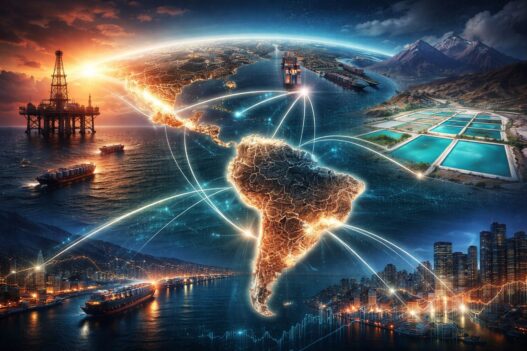
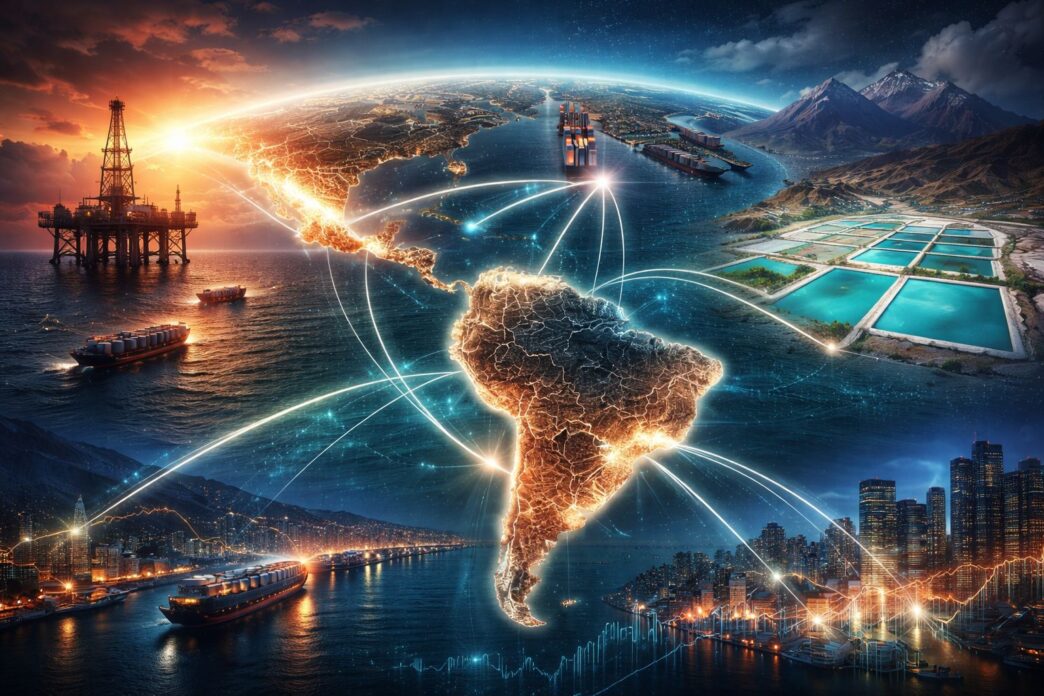
Latin America now plays a central role in global geopolitics. Oil diplomacy in the Caribbean, lithium mining in the Andes, and trade talks in North America are all influencing global markets. In 2026, political changes, security issues, climate challenges, and competition for resources have made the region a key area where local events can affect the world economy.
Energy Politics and Sanctions: Venezuela’s Strategic Weight
Oil is still Venezuela’s main tool in geopolitics. While production has dropped from past highs, the country still has the world’s largest proven crude oil reserves. For years, U.S. and allied sanctions have restricted exports and foreign investment.
Recent changes to sanctions and new conditional licenses have made it possible for more foreign companies to get involved and for oil output to rise, according to international media reports in 2026.
These changes could have a big impact. More Venezuelan oil could help lower prices in tight energy markets. On the other hand, new restrictions or political unrest could quickly cut supply and make oil prices more volatile. Since the global economy is already sensitive to energy shocks, Venezuela’s political path is an important factor for inflation and investor confidence.
Organized Crime and Economic Stability: Ecuador’s Security Challenge
In Ecuador, escalating violence linked to organized crime has created serious governance and economic challenges. High-profile prison unrest and emergency security measures have underscored the severity of the crisis. International reporting in 2026 noted that prison deaths continued to rise despite intensified government strategies.
The economic impact goes beyond safety concerns. Ecuador exports bananas, shrimp, and oil. If ports like Guayaquil or transport routes are disrupted, trade can slow down and foreign investors may stay away. Higher risk also means higher borrowing costs, which can hurt the country’s finances.
When instability rises in one country, regional investors often rethink their investments across Latin America. This means Ecuador’s crisis can affect financial markets in other countries too.
Climate Stress and Trade Infrastructure: The Panama Canal
The Panama Canal facilitates roughly 5–6 percent of global maritime trade, making it one of the world’s most critical logistical arteries. Yet its operations have become increasingly vulnerable to climate variability.
Recent reports show that water shortages from less rainfall have reduced the canal’s capacity, so fewer ships can pass each day. Disputes among port operators near the canal have also raised worries about keeping operations running smoothly.
With fewer ships able to pass, freight rates go up, deliveries take longer, and shipping costs rise. These higher costs can add to global inflation and disrupt supply chains, especially for goods moving between Asia and the Americas. Because of this uncertainty, multinational companies are looking for new shipping routes and rethinking how they manage inventory.
Lithium, Environmental Governance, and the Green Transition
Latin America’s “lithium triangle,” which includes Chile, Bolivia, and Argentina, holds some of the world’s biggest lithium reserves. Lithium is a key mineral for making electric vehicle batteries.
In Chile, worries about water shortages and Indigenous rights in the Atacama region have made debates over new mining projects more intense. International news has pointed out fears that more mining could harm delicate salt-flat ecosystems. At the same time, Bolivia has made changes to attract foreign investment in its lithium industry, showing a move toward more private-sector involvement.
These policy choices have global effects. If project approvals are delayed, lithium supply could shrink and battery prices could rise. On the other hand, clear and stable rules could speed up production, lower price swings, and help the world shift to cleaner energy.
Argentina’s Reform Agenda and Market Confidence
Argentina’s bold economic reforms to open up labor markets and control inflation have caught the world’s attention. Passing new labor laws was a major step in the country’s move toward a more market-friendly economy, according to international financial reports in 2026.
Argentina’s progress is seen as a sign of confidence for other emerging markets. If the reforms bring stability, they could draw in foreign investment and boost exports of farm products and energy. But if there is social pushback or the government changes course, it could bring back instability and make investors more cautious about all developing economies.
Trade Integration and the USMCA Review
NoTrade integration in North America is still key for both regional and global supply chains. The planned 2026 review of the United States–Mexico–Canada Agreement is an important moment for policy stability. Research groups have pointed out that this review will decide if the agreement stays in place or faces renegotiation.
Manufacturers using nearshoring strategies need clear and stable trade rules. Any uncertainty can slow down investment, change how production is organized, and shift global trade patterns.
Interdependence in an Era of Fragmentation
The events in Latin America in 2026 show just how connected the global economy is today.
Venezuela’s energy policy affects oil prices. Instability in Ecuador disrupts trade routes. Climate issues in Panama change shipping patterns. How lithium is managed in the Andes affects electric vehicle costs everywhere. Argentina’s reforms influence how investors feel about emerging markets.
For both policymakers and investors, the region offers risks and opportunities. Stable governments, clear rules, and ongoing reforms can strengthen global supply chains and help keep commodity prices steady. But instability or divided policies can add to uncertainty, especially when the world economy is already stressed.
Latin America’s geopolitical situation is not just a local issue. It is a key part of how the global economy is changing.