




Egypt celebrates the arrival of the Holy Family: a blessed journey to the heart of the Egyptian nation
Cairo – June 1
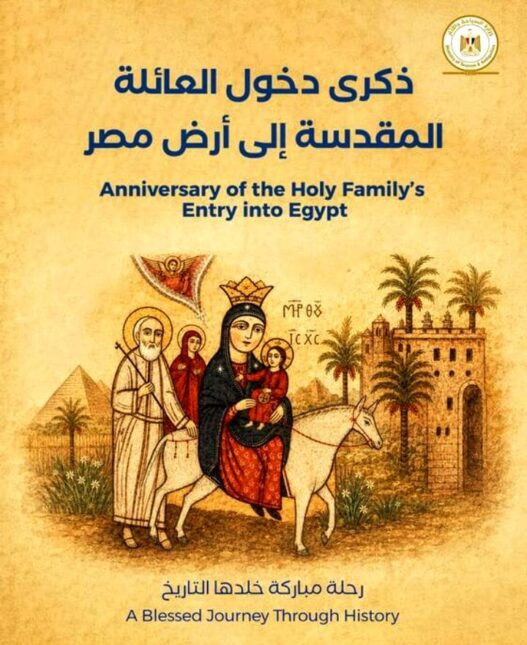
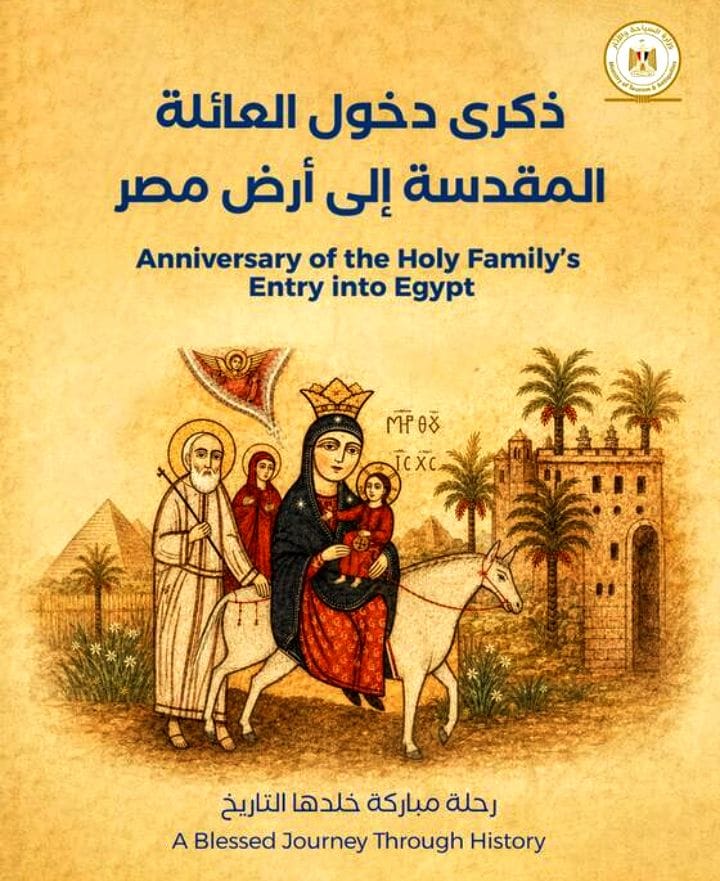
Yesterday, as every year on June 1, Egypt celebrated the anniversary of the arrival of the Holy Family in its land. This anniversary represents one of the most important spiritual and religious journeys in human history and underscores Egypt’s unique place in the world’s religious and cultural memory.
The Egyptian state is committed to commemorating this anniversary by supporting the project to restore the Holy Family Trail and the historical sites associated with the journey. These sites are considered an integral part of Egypt’s spiritual and cultural heritage and a symbol of the tolerance and coexistence that have characterized the country over the centuries.
According to Church tradition, the Holy Family’s journey to Egypt lasted more than three years, passing through numerous places that still bear witness to this blessed journey today. The journey began in Sinai and the Eastern Delta, continuing through Cairo and Wadi El Natrun, reaching the Jabal al-Tayr area in the Minya Governorate, and then the Monastery of the Virgin Mary in the Asyut Governorate, before returning to Palestine.
This commemoration is not just an occasion for Christians; it is cherished and appreciated by all Egyptians, Muslims and Christians alike, as it is an integral part of Egypt’s national and spiritual history. The Holy Family found safety and refuge in Egypt, and their journey became a symbol of the noble human values this land has embraced for millennia.
Many Egyptians express their profound pride that Jesus Christ, son of Mary, peace be upon him, set foot on Egyptian soil, lived in its land, drank its water, and ate its fruits: an event Egyptians consider a divine blessing and a special gift bestowed upon their country. They consider Egypt’s reception of the Holy Family a shining page in national history, an honor passed down from generation to generation.
Egyptians are proud of the historic role the Egyptian Church has played over the centuries in spreading and teaching the Christian message and preserving its spiritual and intellectual heritage. Egypt became one of the most important Christian centers of the ancient world, and from it emerged theological and intellectual schools that influenced human civilization and helped spread Christian teachings across vast regions and among the world’s peoples.
Historians affirm that Egypt was not simply a stop on the Holy Family’s journey, but rather a blessed land linked to epochal religious events that left a profound mark on the Egyptian consciousness. The memory of the Holy Family’s arrival remains a symbol of national unity, coexistence, and love, and a testament to Egypt’s unique position in religious and human history.
On this occasion, Egyptians reaffirm their pride in this unique spiritual heritage, emphasizing that the Holy Family’s path is not simply a collection of archaeological sites or historical monuments, but rather an integral part of Egypt’s cultural identity and the message of tolerance it has brought to the world throughout the centuries. The footprints of the Holy Family on Egyptian soil will forever remain a testimony to an eternal divine blessing and a precious memory in the hearts of all Egyptians, who see this blessed journey as a symbol of the security, hospitality, and faith that have characterized the land of Egypt throughout history.
The Egyptian Church, scholars, monks, and Egyptian fathers have played a fundamental and influential role in the dissemination of Christian thought, its teaching, and the preservation of its heritage throughout the centuries.