





The apprehension regarding the depletion of generations and the governance of the social body is by no means a uniquely modern phenomenon. Rather, it represents a cycle that Mediterranean civilizations have endeavoured to master for millennia, beginning with the systemic efforts of Caesar Augustus in the first century BC. Upon perceiving that the might of the Roman Empire was contingent upon the biological vitality of its citizenry, the first emperor drafted the Lex Julia de Maritandis Ordinibus and the Lex Papia Poppaea, which penalized celibacy and conferred privileges upon fathers of three children (ius trium liberorum).
Nevertheless, Augustus’s difficulty in securing a direct succession demonstrated early on that demography is an organic force that frequently eludes absolute power—a lesson that modern nations appear to be relearning in the face of the current “demographic winter”. This tension reached a dramatic nadir with the Black Death in the 14th century, which decimated approximately one-third of the European population. The resulting brutal demographic vacuum led to an immediate appreciation for labour, permitting the peasants and artisans of Southern Europe to gain unprecedented bargaining power and thereby accelerating the dissolution of feudalism.
During much of the 20th century, demography in Southern Europe served primarily as a technical instrument at the disposal of the State to address administrative requirements, economic planning, or fiscal necessities. However, the foundational family structure encountered unprecedented challenges from the beginning of the century. In Portugal specifically, following the Great War in 1918, the country lost an entire generation of men; the violence and instability of the First Republic provided no political peace, and the devastation wrought by the Spanish Flu engendered a demographic decline that paralyzed the nation’s rejuvenation for decades.
Historically, Southern Europe functioned on a familial foundation where intergenerational support served as a form of social providence. This fundamental fabric was unsettled by progressive urbanization, the universalization of schooling, the entry of women into the labour market, and the redefinition of familial roles. Within a few decades, Greece, Italy, Spain, and Portugal transitioned from patterns of high fertility to persistently low levels, accompanied by unprecedented longevity. Population aging has become a structural feature, transforming the population pyramid into a statistical “coffin”: narrow at the base and broad at the summit.
This metamorphosis is reflected in the morphology of Mediterranean cities, which are being compelled to redesign themselves for a population that is not only older but, above all, more solitary. Obstacles such as the steep staircases of Lisbon or the narrow pavements of Rome have become problematic, leading urban planning to focus on the “urbanization of empathy” and the “15-minute city”.
Furthermore, human mobility has added complexity to the equation. Countries that were, for centuries, “exporters” of people through diasporas and mass emigration have become harbours for arrivals. Today, immigration is the central factor preventing population decline, introducing human diversity and creating demand for new typologies of housing and urban planning.
Augusto del Noce discerned the signs of a society that endangered tradition in its very sense of “passing the baton” to new generations. A culture that ceases to believe in a truth above itself, focusing exclusively on the experience of the individual, will naturally fragment the subsequent generations to whom that witness of truth is not conveyed. Demography has suffered a similar fragmentation: considering populations merely as numbers of consumers, taxpayers, or voters—without connecting them to the foundation of their own lives, namely the family—has created a chasm difficult to bridge given recent socio-political circumstances such as refugees, economic crises, and climate change. Demography today, therefore, is no longer a peripheral variable in economics; it has become the heart of the social contract and the equation of the cultural future.
Pension systems, health services, and social support networks, conceived for younger societies, now face mounting tension, strained by a new population reality that is beginning to take a more pressing form. To respond to this transformation, a paradigm shift is required—one that abandons fragmented and sectoral policies in favour of concerted solutions that account for urgent pressures, such as:
- Investment in caretaking networks to ensure consistent support from infancy to old age;
- A labour pact that views every employee, worker, or entrepreneur as part of a family rather than merely an individual, so as to create markets compatible with life projects and parenthood;
- And migratory integration through policies ensuring access to education, housing, and employment, alongside regional cooperation to foster the sharing of best practices between Southern European nations.
Ultimately, human capital must be viewed not only as the primary asset of a nation’s GDP but also as its very soul and engine of the future. It is time to be forthright regarding the fact that Southern Europe stands at a decisive crossroads, where it is imperative to make decisions based not only on robust data but, above all, on a vision committed to protecting the legacy of its history.
History teaches that in matters of demography, there are no empty spaces: if we do not apply our own criteria based on our values, we can only acquiesce to whatever other paradigm is presented to us. Let us be the true engine of the future, remaining faithful to our way of life and our way of being—heirs to a centuries-old culture shaped by the Christian matrix that raised cathedrals and planned squares, and gifted the world with art, music, ethnographic traditions, and a singular understanding of human dignity. We must not allow the defense of this heritage to be surrendered to extremist discourse; when moderates withdraw, only the clamour of those who thrive on division remains to be heard.
Demography is today a matter of State and a matter of survival in its myriad dimensions. May we recognize this challenge as the defining problem of the century for Southern Europe and act accordingly with courage, strategy, and a sense of responsibility.
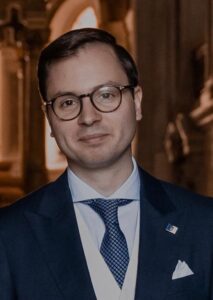
Fábio Miguel Ferreri de Gusmão
Political scientist and strategist, focused on Europe and global geopolitical affairs.
Fábio analyses political power dynamics, institutions and international trends, with a special interest on the challenges and opportunities concerning European affairs.