



Ascolta la versione audio di questo articolo (generata da IA).
“Wise men say, and not without reason, that whoever wishes to foresee the future must consult the past.”
Niccolò Machiavelli, Discourses on Livy, Book III
Fifteenth-century Italy was a fragmented and turbulent political arena. Its city-states and so-called communes vied for prestige, territory, and, in some cases, their very survival. Power had to be staged, negotiated, and even concealed in order to bring about a desirable stability. Amid this interplay of light and shadow, four figures, two Italian, one Spanish and one Portuguese, emerge as enduring archetypes of the art of governing: Lorenzo de’ Medici, Rodrigo Borgia, Francesco Foscari and King John II of Portugal. Four men, three cities and one nation to help answer to an all-time question: what does good governance entail?
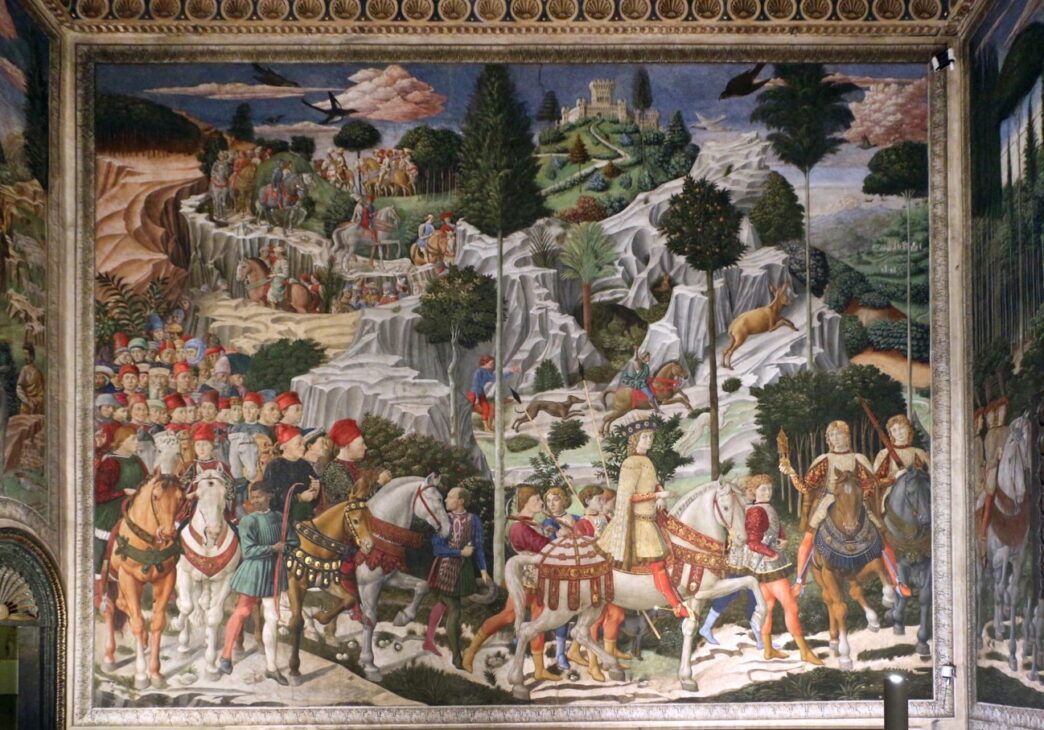
Lorenzo de’ Medici ruled without a throne, but rarely without control. His authority resided in carefully maintained balances and the invisible architecture of alliances. In Florence, where republican ideals coexisted with fierce rivalries, Lorenzo was more than a politician: he was a choreographer of the possible. His genius lay precisely in preserving the forms of the republic while hollowing them out from within. The municipal courts continued to function, but became docile instruments of his will; the Council of Seventy, created in the aftermath of the Pazzi Conspiracy, ensured that power remained in the hands of his loyalists. As Guicciardini observed, it was the rule of a benevolent tyrant within a constitutional republic, a contradiction that Lorenzo sustained with remarkable elegance. When crisis struck, he traveled personally to Naples to negotiate with King Ferdinand I, isolating the Pope and saving Florence. By patronizing artists, philosophers, and ideas, from Leonardo da Vinci to Michelangelo, he elevated politics to the level of civilization, accumulating something more subtle and enduring than territory: cultural capital.
If Lorenzo represents power as harmony, Rodrigo Borgia embodies it as will. The relationship between the two men is itself revealing: they needed each other, for the Medici were the bankers of the Holy See, and Rodrigo, as a powerful cardinal, depended on that financial partnership. The tension, however, was constant. When the Medici bank was unable to meet Rodrigo’s requests for funds, both men recognized, with equal clarity, that their partnership was as necessary as it was precarious, and it was precisely this mutual understanding that kept the tension perpetually simmering. One episode captures the dynamic between them well: Rodrigo wrote to Lorenzo asking that his son Cesare, who was studying in Pisa, be placed under his protection, a gesture that reveals both the trust and the asymmetry in their relationship. As Pope Alexander VI, a title he assumed in 1492, the same year Lorenzo died, Borgia embraced with full conviction the duality that had always defined the papal figure: temporal sovereign of the Papal States and spiritual head of Christendom, he exercised both powers with equal determination, seeing in the tension between the sacred and the political an advantage to be exploited and a source of authority to be deepened. Under his rule, the Church became simultaneously a spiritual guide and a political machine: efficient, feared, and deeply human in its weaknesses. His approach was brutally clear: Borgia saw the world as it was and simply set out to dominate it. Where Lorenzo seduced, Borgia imposed.
And then there is Venice, that almost improbable exception in the political landscape of the age. Francesco Foscari became Doge in 1423 and held the office for thirty-four years, the longest dogeship in the republic’s history. His great wager was the expansion onto the Italian mainland, the terraferma policy, pushing westward into Brescia, Bergamo, and Verona to secure the strategic depth that a maritime power needed to survive on land as well as sea. Yet what defines Foscari most durably is not territorial ambition but personal sacrifice. When his son Jacopo was tried, tortured, and exiled by the Council of Ten on charges of treason, the Doge presided over the very institutions that condemned him, and did not obstruct them. He wept, but he did not intervene. In 1457, the Council forced his abdication; he died a week after leaving the Palazzo Ducale. The institution had consumed the man, and the institution endured. This is governance as sacrifice: where Lorenzo shaped institutions to serve his genius and Borgia bent every rule to serve his will, Foscari served a system that would eventually discard him, and served it faithfully anyway. In him we find the strength of continuity and the virtue of a system built on a deep distrust of concentrated power — a less seductive and less dramatic form of authority, but in many ways the most modern of the three.
King John II of Portugal, the Perfect Prince, is a figure whom fifteenth-century Europe rarely places alongside the great Italian names, yet he was entirely their contemporary and in no way their inferior in the art of governing. His power was exercised not only over the domestic nobility but over the very horizon itself: King John II was, above all, an architect of the world order. His reign was distinguished by decades of sustained commitment to overseas expansion, backing the voyages of Diogo Cão and Bartolomeu Dias, who in 1488 rounded the Cape of Storms and opened the sea route to the East. When Columbus returned from the Americas in the service of the Spanish Crown, King John reacted with a combination of diplomatic firmness and strategic composure: he refused to recognize the legitimacy of the papal bulls that Rodrigo Borgia, now Pope Alexander VI, had granted to Castile, and pressed for direct negotiations with Isabella and Ferdinand. The result was the Treaty of Tordesillas, signed in 1494, by which the line of demarcation was shifted to 370 leagues west of Cape Verde, guaranteeing Portugal not only the Cape route but, as would later become clear, Brazil itself. This was the hallmark of King John II: the ability to transform diplomacy into an extension of his geopolitical vision, negotiating directly with kings when the Pope was unfavorable to him, and quietly tracing the contours of an empire that his successor would inherit, ready to flourish.
Among these four models, balance, imposition, institution, and vision, a timeless portrait of politics takes shape. Lorenzo shows us that power can be refined; Borgia, that it can be ruthless; Venice, that it can be distributed; King John II, that it can be projected beyond time and beyond the ruler himself.
The fifteenth century offers us a mirror in which we see that power can build cathedrals or conspiracies, inspire genius or fear, endure for centuries or vanish with a man. But it is unambiguous in one conviction: those who most shaped our civilization were also those least deluded about its nature.