




Ascolta la versione audio di questo articolo (generata da IA).
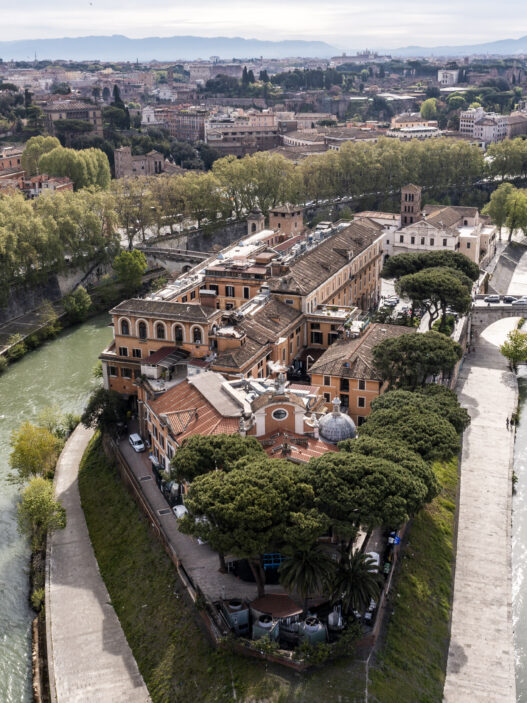
Tiber Island in Rome, with its strategic position in the Tiber River, is a place that fascinates and enchants. It is not just a geographical landmark, but a crossroads of legends and myths that date back to ancient times. If, while walking along the riverbanks and observing the slow flow of the waters, you find yourself imagining stories of deities, healers, and mysterious figures—you’re not alone. The legends of Tiber Island are part of a cultural heritage rooted in antiquity, enriched by tales that blend history and myth into a captivating tapestry.
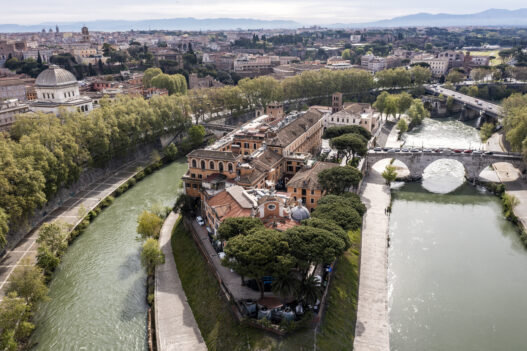
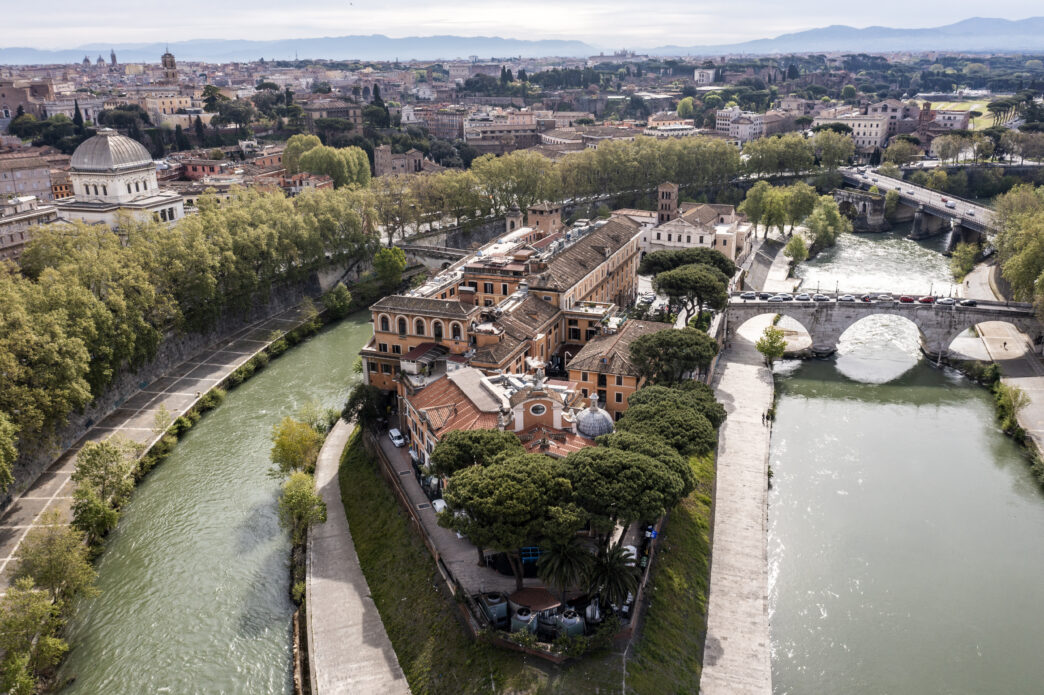
The island was formed from sediment accumulated over centuries, but mythology attributes its creation to two legends. Inhabited since the earliest days of the city, legend has it that the island was born from sheaves of grain thrown into the river by Romans protesting against the last king, Tarquinius Superbus. Its curious boat-like shape also traces back to ancient tradition. In 291 BC, a ship is said to have sailed from Rome to Epidaurus to the temple of Aesculapius, seeking help during a deadly epidemic. After performing the required rituals and consulting the Sibylline Books, they undertook the journey. The ship returned with a serpent, sacred to the god of medicine. Upon arrival, the serpent swam into the river and reached Tiber Island—indicating the exact spot where the Romans were to build a temple to Aesculapius. The epidemic ceased, and in memory of this miracle, the island was shaped like a ship to ensure the god’s return. The obelisk placed at its center is said to represent the ship’s mast. Known in Rome as the “infamous column,” it once displayed the names of those who did not follow Easter customs.
Throughout history, the island retained its association with healing, from the medieval plague hospital to the present-day Fatebenefratelli Hospital. Today, in place of the temple stands the Basilica of St. Bartholomew on the Island, erected during the visit of Emperor Otto II at the turn of the first millennium. Inside is a medieval well, traditionally believed to be the sacred spring of Aesculapius’ temple. By descending the stairs near the Fatebenefratelli Hospital and heading to the southern end of the island, one can admire the ancient marble cladding, curved like the prow of a ship, bearing the serpent entwined around a staff—the symbol of Aesculapius.
Another myth closely linked to Tiber Island is that of the she-wolf who nursed Romulus and Remus. The legendary founders of Rome are deeply rooted in this place. Tiber Island is considered one of the places where the twins were raised. According to some accounts, after being saved, they were cared for by the she-wolf on the island, which became their sanctuary—a sacred haven where they grew up before founding Rome. The island thus became a symbol of divine protection and the force of nature that allowed the abandoned infants to survive.
There is also the legend of the “Petrified Maiden.” It tells of a young noblewoman from 1350 who was locked in a tower for refusing to marry a nobleman chosen by her family, waiting in vain for her beloved to return from war. She waited so long that she turned to stone. Her face is said to be set into the Fabricius Bridge. The sculpture actually dates to Roman times, but its stony gaze, eternally fixed on the bridge, seems to challenge passersby to uncover the identity behind the enigmatic face worn by time.
The island is connected by two bridges: the Fabricius Bridge and the Cestius Bridge. Pope Sixtus V ordered the restoration of the ancient Fabricius Bridge, dating to 62 BC. Four of the most skilled architects of the time were commissioned—but they constantly clashed. Despite their disputes, the restoration was superbly executed. The Pope congratulated them but, troubled by rumors of their conduct, ordered them to be beheaded on the very bridge. However, recognizing their craftsmanship—or as a cautionary tale—he allegedly had a monument built in their honor: four heads united in a single stone block. These can still be seen today as herms on the bridge balustrades, actually representing Janus, the Roman god who protected thresholds, gates—and bridges.
A more recent story from the hospital reveals that it wasn’t just a place of healing—it became a sanctuary for many Roman Jews fleeing Nazi-Fascist persecution during World
War II. In 1943, thanks to a fabricated disease—the so-called “K Syndrome”—devised by Dr. Giovanni Borromeo and Adriano Ossicini, many Jewish people were saved. A courageous and deeply humane act of solidarity.
The myths surrounding the island do not end here. Tiber Island bears the sacred mark of protection and mystical transition. Its still prow continues to sail through the sands of time, guiding us to a place where myth and history blend into a visible, yet hidden, reality.
Note: This text draws from many third-party sources. It is non-commercial and offered solely as a tribute to our beloved Italy and the city of Rome.