






Ascolta la versione audio di questo articolo (generata da IA).
In this era, the space industry is no longer a slow-moving, government-dominated frontier but has started looking more like a disruptive ecosystem — one where change doesn’t arrive in waves, but in avalanches.
At first glance, it looks like technological storytelling: reusable rockets, miniaturized satellites, mega-constellations, and robotics making space cheaper and more accessible. But that’s only the visible layer. The real transformation always goes deeper and deeper — and far more chaotic.
The turning point wasn’t just new rockets. It was new rules. When space agencies like NASA and ESA shifted from cost-plus contracts to fixed-price models, they didn’t just tweak procurement — they rewired the incentives of the entire industry. Suddenly, private companies were no longer supporting government space programs. They became the main players, shaping the design of space technologies, including rockets. From there, everything else accelerated.
New markets emerged: satellite Internet, phone by satellite, orbital servicing, even early visions of space tourism and asteroid mining. What used to be “missions” became “business models”. Space is turning into a marketplace.
And then came the entrants. Not just giant companies like Amazon, but also bold startups and entrepreneurs willing to gamble on physics and finance at the same time. Meanwhile, new space countries entered the scene, turning what was once an exclusive club into something more common — and unpredictable.
But the real mechanism is not any single disruption. It’s how they connect with each other. Lower costs made possible by new technologies can prompt policy changes, which open new markets, attract new entrants, and encourage further investment. Together, these changes create a powerful feedback loop that accelerates the pace of transformation. An example is the rise of satellite mega-constellations like Starlink, OneWeb, ICEYE, and smaller experimental ventures such as Zero 2 Infinity. Their success is not driven by a single disruption, but by the convergence of technology, policy, and market forces. Remove one pillar, and the system weakens. Together, it scales globally.
Even the way space is built has changed. Rockets have become modular, manufacturing more digital, and production faster and leaner.
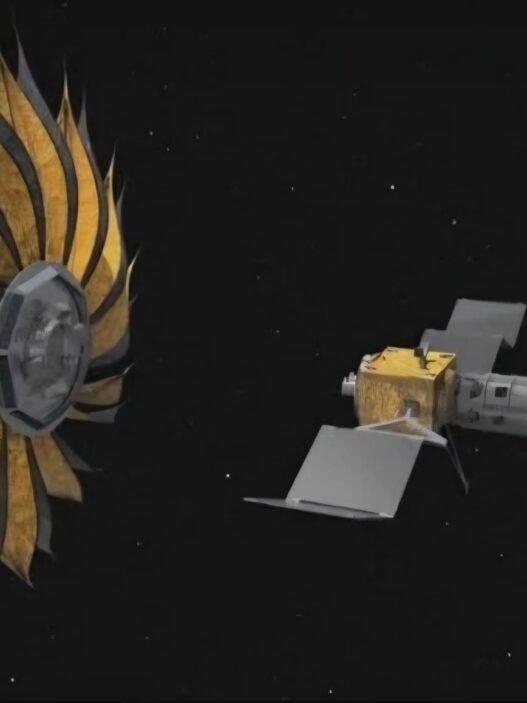
However, this acceleration might come with friction. More satellites mean more congestion, more activity means more debris in outer space. Therefore, the industry must find new solutions to solve new problems — especially cleaning space debris and minimizing environmental impacts
And that is the core paradox of New Space… the system doesn’t just evolve — it constantly reinvents itself, creating new opportunities while making old ways of working obsolete.
What emerges is not just a single disruption, but a system of disruptions — interlocked, accelerating, and bonding one another so deeply they can no longer be understood in isolation.
References :
- Dos Santos Paulino, V., Pulsiri, N., & Bénaroya, C. (2024). Navigating disruptions with bibliometrics: The New Space case. Journal of Innovation Economics & Management, 44(2), 137–160.
- Bénaroya, C., & Dos Santos Paulino, V. (2024). Le New Space: ruptures et transformations de l’écosystème spatial. ISTE OpenScience.
- Dos Santos Paulino, V., & Pulsiri, N. (2022). Safeguarding Earth and space’s environment: Issues and trends towards sustainable development. International Journal of Technology Management & Sustainable Development, 21(3), 353–376.
- Dos Santos Paulino, V. (2020). Innovation trends in the space industry. ISTE Ltd & John Wiley and Sons.