



Ascolta la versione audio di questo articolo (generata da IA).
Mentre oggi i nostri sguardi si rivolgono verso l’Iran, rendiamoci conto che il Mar Caspio costituisce un confine climatico, geologico e mentale quando si arriva dall’Europa..il Grande Gioco, una tradizione in questa regione fin dal XIX secolo, continua…
Un confine climatico, geologico e mentale
Mentre oggi i nostri sguardi si rivolgono verso l’Iran, rendiamoci conto che il Mar Caspio costituisce un confine climatico, geologico e mentale quando si arriva dall’Europa, ad esempio da Baku. Questo mare interno può tuttavia essere attraversato o sorvolato rapidamente. Ma è anche una linea di demarcazione strategica. Il cielo, quando non c’è la guerra, si schiarisce improvvisamente e completamente; se la luna piena si riflette nello specchio d’acciaio della superficie del mare, ciò può persino trarre in inganno. Come lanterne, i pescherecci e le torce delle piattaforme di trivellazione sparse qua e là, simili a fanali, segnalano una presenza umana che si credeva scomparsa.
I vicini del Mar Caspio
Gli abitanti delle rive e i vicini del Mar Caspio non sono, del resto, potenze insignificanti. Accanto all’Azerbaigian, vi sono l’imponente Iran e il vicino Turkmenistan, con cui i rapporti sono sempre stati complessi; e a nord, due giganti quali il Kazakistan e la Russia. Questi cinque paesi si riuniscono periodicamente in occasione dei vertici dei paesi rivieraschi del Caspio.
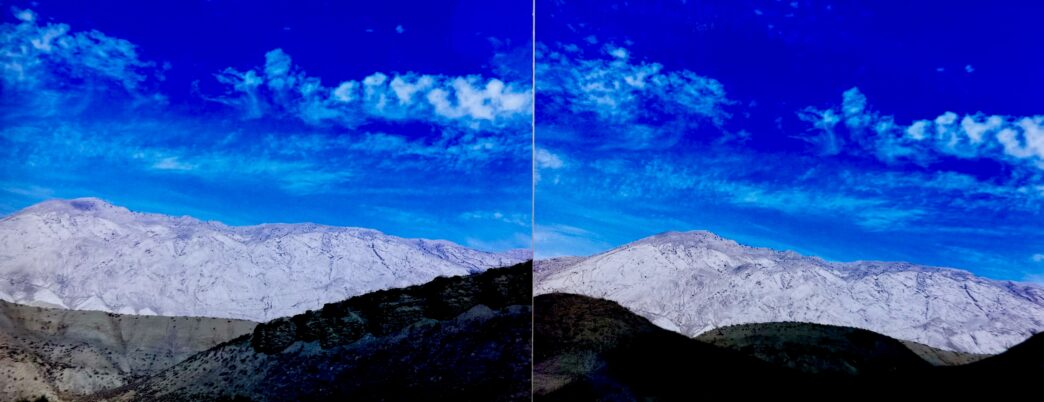
Il Turkmenistan è uno Stato senza sbocco sul mare, circondato da quattro paesi, tra cui l’Afghanistan all’estremità orientale; a ovest si trova l’Himalaya, con la barriera apparentemente invalicabile dell’Hindu Kush, che si estende per 800 km. È lì che l’Asia centrale inizia a inclinarsi verso sud. A causa della collisione di grandi placche tettoniche, l’attività sismica è elevata in questa regione. Ashgabat, completamente distrutta da un terremoto nel 1948, è stata ricostruita fino a diventare una magnifica città di marmo.
Gli idrocarburi
In questo paesaggio ricco di minerali sono presenti anche materiali organici come gli idrocarburi. Il suolo racchiude ricchezze considerevoli, tra cui la quarta riserva di gas al mondo dopo Russia, Iran e Qatar. Possedere il gas è una cosa, ma bisogna anche estrarlo in un ambiente particolarmente ostile, dove il terreno può incendiarsi e bruciare per decenni, come accade ancora oggi presso le famose e spettacolari “Porte dell’Inferno”; e bisogna esportarlo, data la posizione isolata del Paese. Temendo la concorrenza, l’Azerbaigian non ha mai agevolato le esportazioni verso l’Occidente; la Russia, che non voleva vedere un altro fornitore sul mercato europeo, ha invocato considerazioni ambientali, che ha osato difendere.
Il nuovo Grande Gioco
Rimangono quindi l’Oriente e il mercato cinese, dove il Turkmenistan è diventato il principale fornitore mondiale di gas, contrariamente a quanto comunemente si crede riguardo alla “densità” degli scambi sino-russi nel settore energetico. Ma il Grande Gioco, una tradizione in questa regione fin dal XIX secolo, continua…
A mineral and organic universe
A climatic, geological and mental frontier
Whilst our attention is currently focused on Iran, let us recognise that the Caspian Sea forms a climatic, geological and mental frontier when approaching from Europe, setting off from Baku. However, it can be crossed or flown over quickly. But it is also a strategic dividing line. The sky clears suddenly and completely; if there is a full moon reflecting in the steel mirror of the sea’s surface, it can even be deceptive. Like lanterns, the fishing boats – and even the torch-like lights of the drilling platforms scattered here and there – signal a human presence thought to have vanished. And that is not all.
Caspian Sea’s neighbours
The Caspian Sea’s neighbours are no insignificant powers. Alongside Azerbaijan lies the imposing Iran and neighbouring Turkmenistan, with whom relations have always been complex; and to the north, the two giants that are Kazakhstan and Russia. These five countries meet periodically at summits.
Turkmenistan is a landlocked state, surrounded by four countries, including Afghanistan to the east, west of the Himalayas, with the seemingly impassable barrier of the Hindu Kush, which stretches for 800 km. It is here that Central Asia begins to slope southwards. Due to the collision of large tectonic plates, seismic activity is high in this region. Ashgabat, completely destroyed by an earthquake in 1948, has been rebuilt as a magnificent city of marble.
Hydrocarbons
Within this mineral-rich landscape, there are also organic materials such as hydrocarbons. The soil contains considerable riches, including the world’s fourth-largest gas reserves after Russia, Iran and Qatar. Possessing gas is one thing, but it must also be produced in a particularly challenging environment, where the ground can ignite and burn for decades, as still happens today at the famous and spectacular ‘Gates of Hell’; and it must be exported, given the country’s isolated position. Fearing competition, Azerbaijan has never facilitated exports to the West; Russia, which did not want to see another supplier on the European market, invoked environmental considerations, which it dared to defend.
The new Great Game
This leaves the East and the Chinese market, where Turkmenistan has become the world’s leading gas supplier, contrary to popular belief regarding the ‘density’ of Sino-Russian trade in the energy sector. But the Great Game, a tradition in this region since the 19th century, continues…