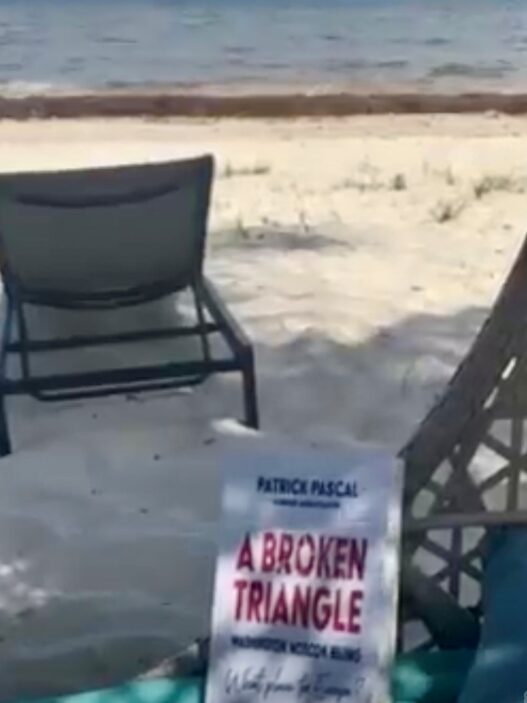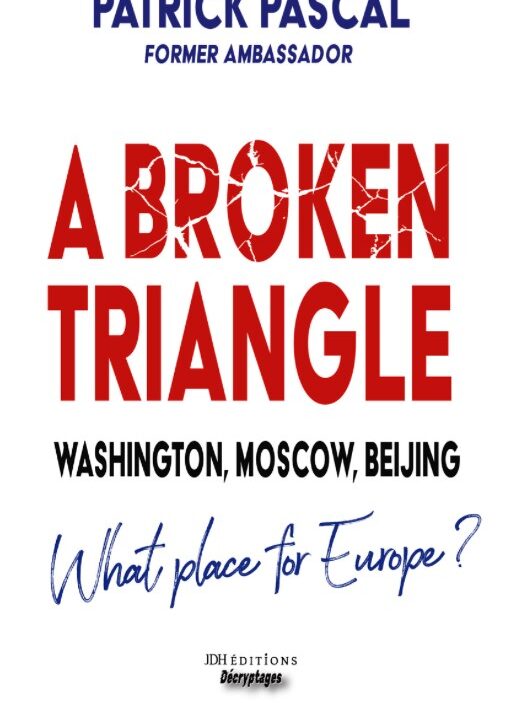




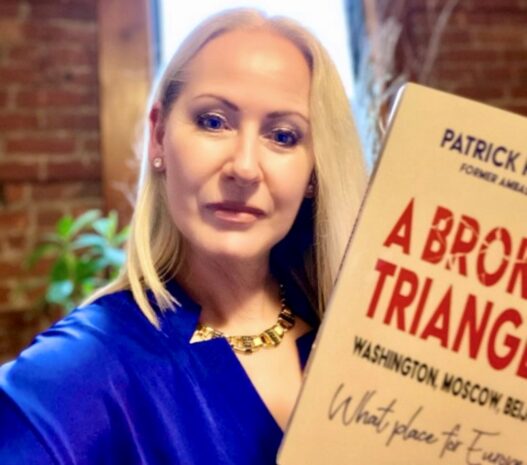
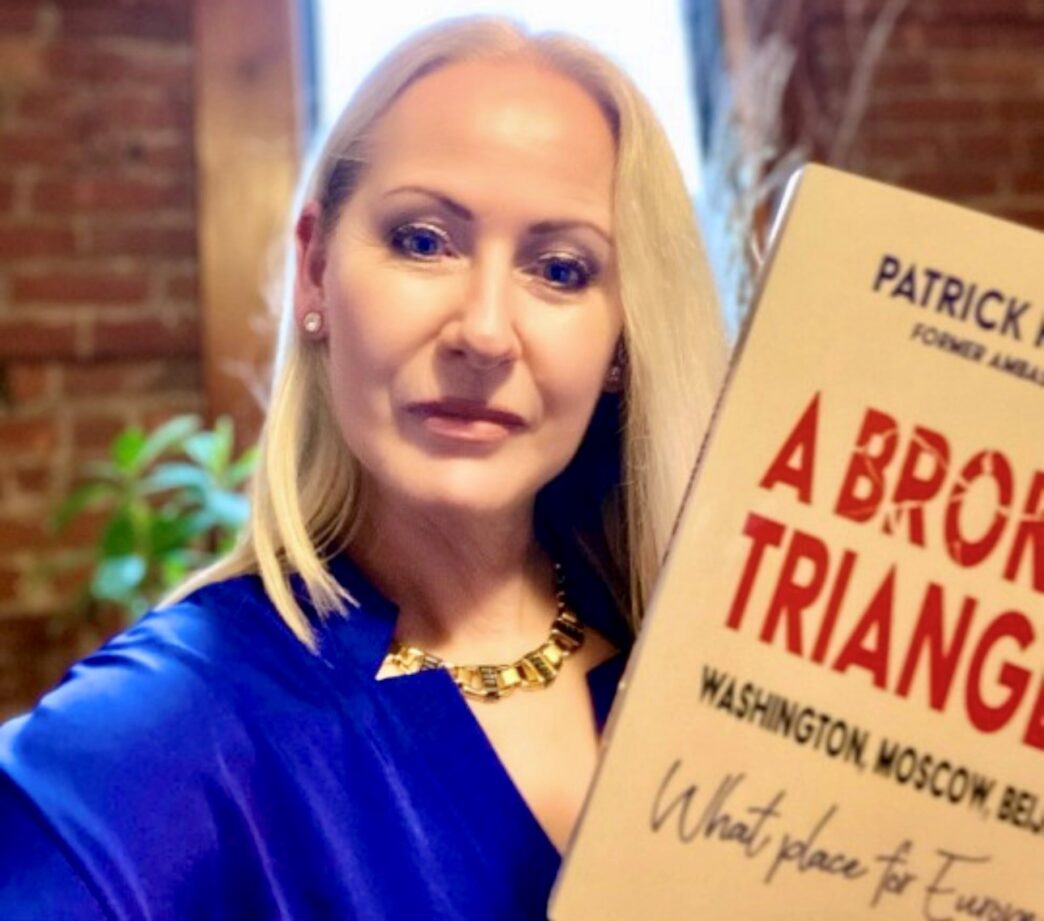
La scrittura può rispondere a diverse motivazioni. Il bisogno può essere semplicemente egoistico e mirare al puro piacere; l’atto di scrivere incentrato sull’autore non è di per sé condannabile, quando permette, ad esempio, di mettere ordine nei pensieri e ha persino virtù terapeutiche; anche aspirazioni diverse possono convergere, anche quando si tratta di fare pedagogia e di voler trasmettere un’esperienza. «A Broken Triangle» (Un triangolo rotto), pubblicato nel maggio 2025, non sfugge a questi diversi approcci che ognuno può giudicare. Ma, in ogni caso, tratta di questioni mondiali e rientra in una disciplina che oggi viene chiamata, in modo a volte un po’ magniloquente, geopolitica. Se è così, i cittadini del mondo sono coinvolti ed è quindi importante riflettere su quella che può essere la loro sensibilità, da un paese all’altro, e sulla loro percezione dei cambiamenti in atto.
Effetto farfalla di un colosso americano
“A Broken Triangle” è ora disponibile negli Stati Uniti. Il suo autore non può che essere onorato da questo interesse amichevole. Più che mai, gli Stati Uniti sono al centro del sistema internazionale, la cui evoluzione è analizzata in questo libro, che dedica loro un capitolo specifico (vedi An American in Paris), come già in un’opera precedente (nel Journal d’Ukraine et de Russie). Sulla scia del meteorologo Edward Lorenz negli anni ‘60, è stata sviluppata la teoria dell’“effetto farfalla” (NB: il battito d’ali di una farfalla in Brasile era considerato teoricamente in grado di provocare un tornado in Texas). Questo studio delle variazioni dei modelli meteorologici, trasposto al mondo delle relazioni internazionali, rivela ora effetti potenziali ancora più significativi dovuti alla modifica trasgressiva delle regole e dei comportamenti degli attori. Questa evoluzione ci ricorda che nulla è immutabile, che si tratti di norme, istituzioni o equilibri di forza. La società internazionale non può sfuggire al movimento generale della vita.
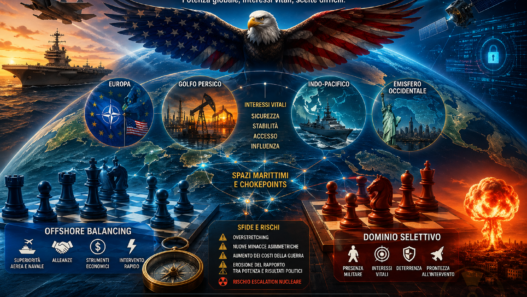
‘In recent years, the international system has undergone accelerated change, with the emergence of centres of power and the preservation of a minimum of regulation within the framework of the UN. The emerging pattern is not necessarily a real division of the world between the most powerful, but rather that of a new three-way game, distinct by definition from the American-Soviet condominium of the Cold War, and even from the first Washington-Beijing-Moscow triangle of the same period. The opening towards China conceived by R. Nixon and implemented by H. Kissinger in the early 1970s was designed to drive a wedge between the two rival Communist powers of the day and to give the United States greater room for manoeuvre, particularly with a view to settling the Vietnam War. One of the effects of this wide-ranging policy – which led to the recognition of the People’s Republic of China following the Shanghai communiqué of 1972 – was also to exert pressure on L. Brezhnev’s Soviet Union and to promote major strategic arms control agreements, such as the ABM Treaty on anti-missile systems and SALT.
Does the new Republican administration in the United States have such a vision ? Are we heading for a new ‘Treaty of Tordesillas’ to divide up the world, along the lines of the redefinition of relations between Spain and Portugal at the end of the 15th century? Will a minimum of multilateral cooperation within the framework of the United Nations – illustrated by a Security Council resolution on Ukraine – be restored? Will the major crises of nuclear proliferation, in North Korea and Iran for example, be brought under control? These are just some of the possible features and prospects for the new world that is taking shape.’ (Excerpts from ‘A BROKEN TRIANGLE’).
Iran: tragedia e gloria
Cannes è una finestra sul Mediterraneo, che è un mondo a sé stante; Cannes è anche una finestra sul mondo attraverso la sua popolazione, i suoi visitatori e il suo Festival. Quest’ultimo ha il suo folklore, i suoi eccessi e la sua superficialità, ma rivela anche una lunga lista di creazioni artistiche notevoli. Jafar Panahi ha vinto la Palma d’Oro nel 2025 con “It Was Just an Accident” sul sistema carcerario, e il cinema iraniano aveva già ottenuto un riconoscimento nel 1997 con “Il sapore dell’azafran” di Abbas Kiarostami, un approccio parabolico al tema della vita e della morte. Questi successi, come nel caso della Palma d’Oro del 2025, riflettono spesso le questioni del loro tempo.
‘In Iran, protests for freedom erupted in 2022 following the killing by police of Mahsa Amini, a 22-year-old Iranian Kurdish woman who was nevertheless wearing a hijab. This tragic incident sparked a large opposition, accompanied by the slogan ‘Woman, Life, Freedom’, for the first time, with such considerable magnitude, since the Shiite revolution of 1979. This revolt in the heart of cities, and particularly in universities, spread throughout the country against a backdrop of economic stagnation, with 30 to 40% of Iranians living below the poverty line and inflation spiralling out of control (estimated at between 40 and 80%).
The protesters, in a country where the average age is under 40, are mostly under 25. This young generation, which has only known Islamic rule and the internet, gathered at Sharif University in Tehran and Ferdowsi University in Mashhad in the north of the country, drawing in many sections of the population, including small bazaar traders and part of the rural population, whether in the Kurdish region or Iranian Baluchistan in the south. The movement was composed of equal numbers of women and men and was spontaneous in the sense that it had no leaders.
A revolt does not necessarily lead to a revolution, especially in the face of a regime whose conservatism has been reinforced since the presidential election in 2021. Iran experienced protests in 2009 against the results of a previous presidential election and ‘economic’ revolts in 2017 and 2019. But the seismic shock in a country with 4.5 million students, who are the driving force behind change, will not be without lasting consequences, even if they are delayed. The simultaneous aspiration for freedom, equality and fraternity cannot disappear.
In Persian culture, the longest night of the year for the winter solstice, called ‘Yalda’s Night’ (Shab-e Yalda), is celebrated in accordance with a very ancient tradition dating back to Cyrus the Great. But Yalda also means ‘rebirth’, that of the sun, and therefore the triumph of light over darkness. One could even say over obscurantism. And ‘Nowruz’ (New Year) follows it every 21 March for the spring equinox. Such will be the fate of Iranian youth’. (Excerpts from ‘A BROKEN TRIANGLE’).
A bordo del “Infante Dom Henrique”
Il Portogallo, che è riuscito a conservare le sue tradizioni, incarna l’apertura al mondo: la sua cultura legata alla terra si combina con il fascino del mare aperto; la punta dell’Algarve, Cabo de São Vicente, spesso chiamata “la fine del mondo”, è un punto all’estremità dell’Europa che sembra sporgere in profondità nell’Atlantico. I portoghesi hanno viaggiato per il mondo e ci hanno aiutato a scoprirlo: hanno esplorato le coste dell’Africa; Vasco da Gama ha doppiato il Capo di Buona Speranza nel 1498, aprendo la rotta verso l’India e l’Asia; la colonizzazione di Macao è iniziata a metà del XVI secolo ed è durata fino al 1999, quando la colonia è stata restituita alla Cina; Pedro Alvares Cabral ha raggiunto le coste del Brasile nel 1500. Il monumento dedicato a Enrico il Navigatore nel quartiere di Belém a Lisbona, sulle rive del Tago, ricorda questa grande storia e la sua prua a forma di nave ci attira eternamente verso le rotte commerciali e l’incontro con altre culture.
Carla Infanta è nata su una nave al largo delle coste dell’Africa meridionale. Il luogo indicato sul suo certificato di nascita è: A BORDO DELLA “INFANTE D. HENRIQUE” – LATITUDINE 27° E 38′ SUD E LONGITUDINE 15° E 14′ EST. È stata battezzata a bordo alla presenza dei suoi genitori ed è stato il capitano della nave a suggerire di includere il nome della nave (NB: “Infante Dom Henrique” è il nome dato a Enrico il Navigatore, figlio del re Giovanni I del Portogallo) nel suo nome. In queste circostanze, Carla Infanta non potrebbe essere più portoghese o più cittadina del mondo.
‘The southern winter was not the season for bougainvilleas and blooming jacarandas, but these high plateaux brought a gentler climate that was not just climatic. The country had already moved towards a form of government in which the minority no longer dominated unchallenged. Harare was immediately appealing (…)
In stark contrast to the deep tensions felt in South Africa, the city of Harare, with its wide, somewhat deserted and then oversized avenues, sparsely urbanised and close to nature, seemed provincial and peaceful in the very pure light of the southern winter. Scattered Mozambican refugees, having fled the violence nearby, were looking for work; they were a reminder, however, that we were in the eye of a cyclone heralding the ultimate end of colonial empires and the transition from one world to another (…)
The East and Southern Africa we travelled through during these years was grandiose, with breathtaking beauty. From the huge herds of elephants in Hwange National Park, as big as Switzerland, where you landed on a runway cut through the forest, to the Zambezi or Victoria Falls, nearly two kilometres wide and twice as high as Niagara Falls, whose roar shook the ground that Livingstone had walked on, to the Ethiopian plateau and the gorges of the Blue Nile, right up to the still-preserved Kilimanjaro icecap, emerging in the early hours of the morning from an intense mist over the savannah, everything was awe-inspiring. We must preserve these images and sensations provoked by a super-powerful nature, rich in species and populated by a fascinating humanity, a kind of Eden to be rediscovered or re-established, which had its coherence and was a world in itself.’ (Excerpts from ‘A BROKEN TRIANGLE’
Leopoli nel cuore dell’Europa
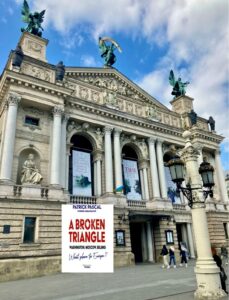
Il Teatro dell’Opera e del Balletto di Leopoli, in Ucraina, è un edificio iconico e uno dei teatri lirici più belli e significativi dal punto di vista architettonico in Europa. Fu costruito tra il 1897 e il 1900, quando Leopoli era la capitale della provincia della Galizia nell’Impero austro-ungarico. Ancora oggi, il teatro dell’opera occupa un posto centrale nella vita culturale di Leopoli. La cultura è spesso diventata un soft power, ma in circostanze ben note è anche un luogo privilegiato per affermare la libertà e l’indipendenza. Non a caso, il Teatro dell’Opera di Leopoli si trova in “Svobody Avenue” (Viale della Libertà), nel cuore del centro storico di Leopoli. Situata nell’Ucraina occidentale, Leopoli è innegabilmente europea nel suo spirito grazie alla storia.
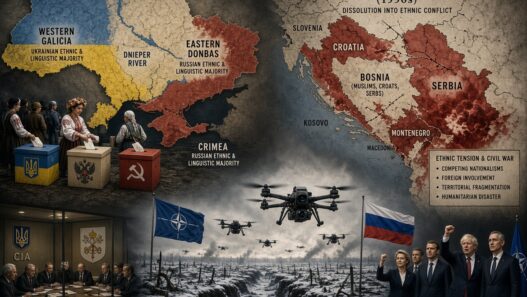
‘The war in Ukraine, which began on 24 February 2022, exploded like a thunderclap across the whole of Europe, a continent that had until then believed in a lasting peace that, despite its complexities and a problematic enlargement, had helped to build Europe. The tremor, of a telluric nature, spread like a shock wave that nothing could stem, producing at the very least global effects, if not raising fears of the prospect of a conflagration on a planetary scale.
Whatever the reasons, whatever the justifications, whatever the specific features of this major conflict compared with other crisis areas, because it directly involved a major nuclear power, a sovereign state with a population of some forty million was the object of a high-intensity war on the European continent; the scale of this war was unprecedented since the Second World War; (…) force has taken precedence over law in a tumultuous manner, and the lasting effects are also likely, through knock-on effects and mimicry, to reverberate in other areas of tension, whether in the Near and Middle East or in the Taiwan Strait (…)
Despite the considerable aid, both military and financial, initially provided by the United States to Ukraine, a fatal outcome for Kyiv would inevitably call into question Washington’s reliability as a ‘protector’ and guarantor of European security. The image and credibility of the United States would be profoundly altered (…)
No one in Europe has ever wanted to die for Donbas, where responsibility for the war that started there in 2014 and for the failure of the parties to the conflict to implement the Minsk agreements has not been fully established. But Russia’s aggression against Ukraine in February 2022 is no less unacceptable in terms of a nation’s right to live in freedom, the violation of the principles of international law, the undermining of the functioning of the international system through the responsibility of a permanent member of the UN Security Council and the considerable disruption to Europe’s development, not to mention the economic consequences for many countries around the world (…) (Excerpts from ‘A BROKEN TRIANGLE’)
Dubai, una finestre sul mondo
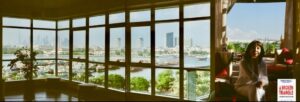
È vero che il mondo è fatto di fratture, dove si incontrano le placche tettoniche. Paradossalmente, il mondo globalizzato è caratterizzato da questo fenomeno, che sembra diventare sempre più pronunciato. La guerra non è mai scomparsa, ma i conflitti ad alta intensità danno l’impressione di una recrudescenza degli scontri mortali; ciò è particolarmente vero per il continente europeo, ma il Medio Oriente non ha mai smesso di essere un focolaio di crisi. Tuttavia, le profonde fratture possono anche proteggere le entità che circondano e consentire loro una sorta di dissenso virtuoso.
È il caso dei paesi del Golfo, al centro delle crisi ricorrenti in Medio Oriente, ma anche del commercio, secondo tradizioni secolari (NB: il Bahrein e i suoi pescatori di perle erano già nel XVI secolo sulla rotta commerciale tra l’India e la Persia; i portoghesi ne erano ben consapevoli e costruirono fortezze lungo queste rotte marittime). Oggi la regione si trova di fronte a un mondo asiatico dal quale accoglie milioni di persone e di cui, in ultima analisi, fa parte.
Gli Emirati, emersi dalle sabbie poco più di cinquant’anni fa, principalmente grazie al petrolio (NB: gli Emirati Arabi Uniti sono stati fondati nel 1971), hanno attinto al mondo per plasmare e sviluppare la propria identità. Sono all’avanguardia in questo nuovo mondo post-industriale con nuove attività (ad esempio servizi, trasporti, IA in futuro), comprese le sue stravaganze (ad esempio Burj Khalifa, la torre più alta del mondo con i suoi 828 metri). Questo nuovo faro, espresso dalla geografia dello Stretto di Hormuz, è un terreno di prova unico e anche un punto di osservazione privilegiato per osservare i grandi movimenti globali. Dubai è una finestra sul mondo.
‘(…) In its frantic search for happiness, Europe has also forgotten that it is no longer alone in the world; the West as a whole is having difficulty accepting these new realities. Instead of a stable world, we should be talking about turmoil without a compass (…)
The inevitable enlargement of the Security Council : there is no formal text setting out the criteria by which a Member State may join the Council as a permanent member. However, the criterion of participation in UN peacekeeping operations is considered relevant. In addition, it is generally accepted that the size of countries, their economic weight and their political influence are the benchmarks that must be met (…)
The UN, ‘the worst of systems, but no better has ever been found’, as the saying goes, will have to be reformed. This may seem unrealistic today, but it was at the end of the First World War that the League of Nations was created and in 1945 that the UN was founded. At the very least, the Council will have to be enlarged to better reflect the state of the world. This will happen if we really want it to, because it is us and it is for all of us (…)
(Excerpts from ‘A BROKEN TRIANGLE’)
► 🟥A BROKEN TRIANGLE🟥 JDH Éditions, 2025