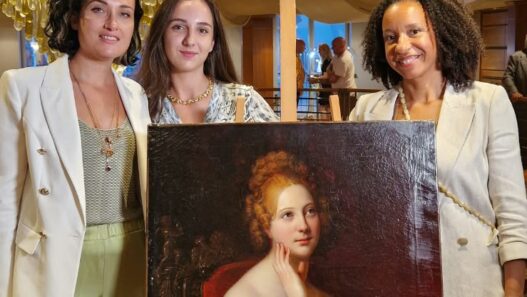




Cynthia Medina Cazales is a Mexican architect with a creative and international vision. Passionate about art, communication and events, she has chosen to live in Rome to realize her dreams and bring her skills into dialogue with the cultural richness of Italy. In this interview, she tells us about her journey, her philosophy and her connection to Tota Pulchra.
You are Mexican, what brought you to live in Rome?
I believe that life should be lived with the goal of discovering the world, looking at it from different perspectives and through new eyes. For me, living means realizing my dreams, and one of these was to live here in Rome. Italy has captured my heart in an inexplicable way: it was love at first sight since my first vacation in Rome in 2019, just before the pandemic. Many people ask me why I chose Italy. Why Rome? Simply because I fell in love with it. Rome, like the rest of your country, seduces with its charm, its classical and modern architecture, the culture of living la dolce vita, enjoying every moment with family, friends, ancient ruins… And then the sun, the wine, the pasta and the tiramisu: I couldn’t ask for more! You really know how to enjoy life, and what may seem like a stereotype, I have seen it become a reality.
Who is Cynthia today and what have you done in the last few years?
I consider myself a dreamer, creative, innovative woman who loves to travel. I am empathetic and sociable, and art in all its forms is my passion, because I believe it is the best way to express who we are. In the last two years I have continued to work in the field of communication and events, carrying out various projects both in Italy and internationally. After completing the specialization course at IED with a focus on marketing, communication and advertising, I have collaborated with various artistic and cultural realities, contributing to the organization of exhibitions, conferences and creative initiatives.
So you are a trained architect, but with diversified experiences: how would you define your path?
Yes, I am a professional architect, but I have dedicated myself to many other fields, especially in organizational communication, the planning of international events, and the development of strategic campaigns. Everything is connected: my training in architecture has given me an aesthetic and structured vision that I have applied in every context, from design to organization. Lately, I have also worked on projects related to sustainable urban development and the regeneration of public spaces in collaboration with Italian local authorities.
What do you think of modern and ancient architecture? Which style do you prefer?
Architecture must respond to the needs of the time in which it is born. I love what has been done in the past, but I believe that each era must speak its own language. For example, the Pantheon is among the most fascinating buildings, but today we have different needs and new technologies. My favorite style is one that adapts to the context and respects the present, while dialoguing with historical memory.
Do you intend to stay in Italy or do you think of returning to Mexico to apply the skills you have acquired there?
My choice to move here was conscious and heartfelt. Italy still has a lot to offer me, and I feel I can contribute with my experience. It’s been almost two years since I arrived, and I continue to learn every day. I don’t rule out starting projects in Mexico in the future, maybe even building bridges between the two countries, but for now my heart is here.
What is your opinion on sacred architecture?
I believe that sacred architecture is fundamental because it encompasses the soul of a community. Churches are not just buildings, but spaces of spiritual elevation. During my Erasmus in San Sebastián, I had the opportunity to study Baroque architecture, so important also for Mexican history, and I delved into the history of the Cathedral of Chihuahua, a heritage that I feel is part of me.